About this article
Medically reviewed- Written by
- Dr Paul Watson
- Medically reviewed by
- Dr Han Simpson
- Published
- July 22, 2026
- Medical review date
- September 8, 2026
- Evidence searched through
- September 8, 2026
- Next review due
- September 8, 2027
- Intended audience
- General Readers & Patients
- Geographic scope
- Worldwide
- Conflicts of interest
- None declared.
- Funding
- Website Owner
- Report a correction
- Report an error or editorial concern
- Medical disclaimer
- Read the medical disclaimer
Medicaid, the insurance provided for low-income individuals that can vary by state, is often referred to as the insurer of last resort, as it guarantees medical service availability for populations that otherwise couldn’t afford it. While it offers these services, that hasn’t always meant that providers were available who could work with these populations. Often the locations that provided behavioral health services, such as Community Mental Health Centers, had difficulty recruiting and retaining medical staff due to low reimbursements and locations that weren’t ideal. With the technology revolution in modern medicine, these limitations have decreased significantly, and the biggest single advancement has been the use of telemedicine, and specifically telepsychiatry.
Providing Mental Health Care Under Medicaid
Medicaid, unlike Medicare, is a state program and as a result has been difficult to historically navigate. Medicaid services are provided by private doctors and clinical groups who get reimbursed by the state government, not by clinics that are run directly by the state, and as a result these reimbursements have to cover both the medical provider and other associated costs. Depending on the state, the reimbursements may be similar to private insurance or may be lower.
Medicaid providers have historically not been able to meet demand, as often the positions have been undesirable due to location and pay. Additionally, while Medicaid facilities run at a low overhead, they still do have facility costs and staff overhead. Since most states will only pay for completed appointments, a high no show rate, not uncommon in mental health, can easily make this an insolvent operation for even the best run facilities.
CMHC and FQHC – The Needed Facilities
Most Medicaid mental health care is provided at Community Mental Health Centers or Federally Qualified Health Centers. Community Mental Health Centers (CMHC) are found in urban areas and are primarily focused on mental health, while Federally Qualified Health Centers (FQHC) are found in underserved areas (typically found in rural locations) and provide an entire suite of health care. Both CMHC and FQHC facilities face many of the same problems – low reimbursement by Medicaid; difficulty in recruiting and retaining staff; and unpredictable funding that changes as state budgets vary. These facilities will often run at a loss due to factors beyond their control, and often the companies running them will have to close facilities, leading to a lack of continuity of care.
CMHC facilities are also often used by referrals from other providers, as psychiatry faces a decrease in the number of providers. Due to increasing retirements and a stagnant number of new psychiatrists, care has become inaccessible, as practicing psychiatrists will often look for higher reimbursements with private insurance or even become “cash pay” only and not take insurance. The result is waiting lists and providers not taking new Medicaid patients. An attempt to improve availability has been made by allowing nurse practitioners and in some states Physicians Assistants to practice and prescribe with minimal supervision from doctors, but this expansion of the provider pool has not been sufficient.
Adoption of new medical technology has finally helped Medicaid behavioral health care finally reach its potential.
Telemedicine – Getting Past Pain Points
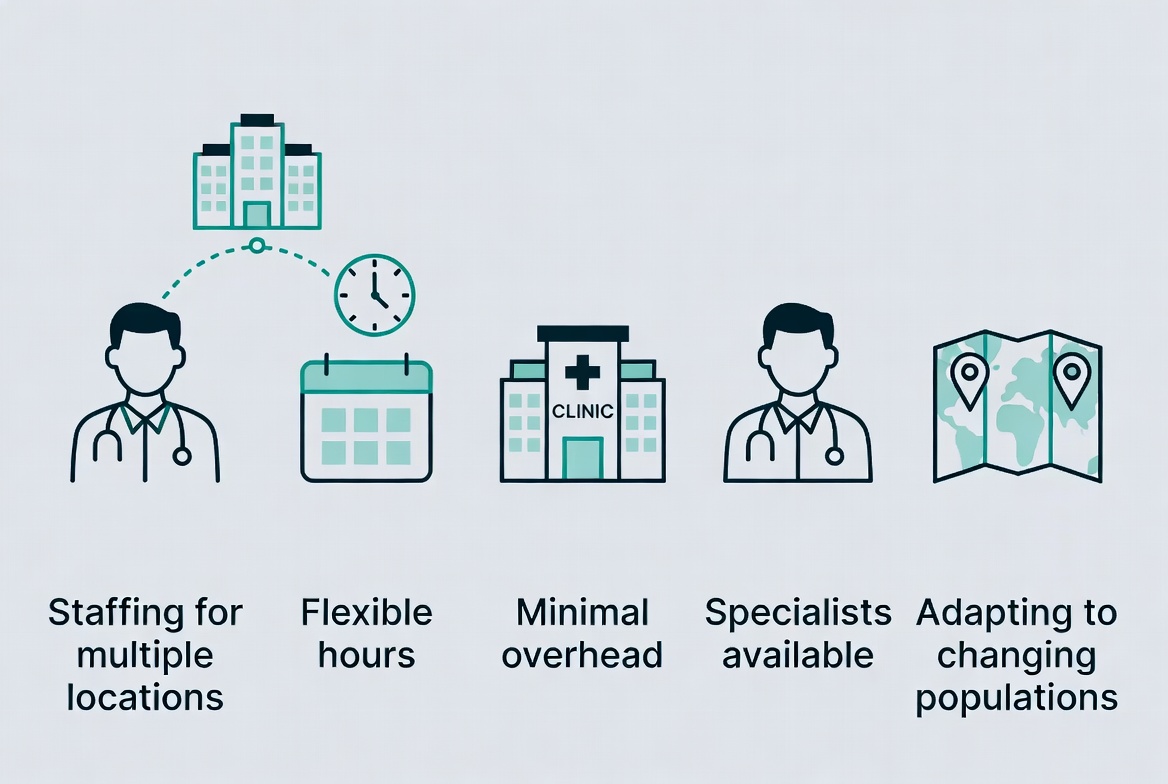
Telemedicine, or the use of two-way video conferencing between a doctor and patient, has helped bypass many pain points previously mentioned, and has led to significantly increased care, with up to 90% of mental health providers using some sort of telemedicine technology. Benefits include:
- Ability to use staff at multiple locations – with the use of telemedicine and telepsychiatry at each CMHC location, mental health care providers can work at multiple locations without the need for transit or separate full-time providers.
- Flexible hours – with the ability of medical providers to work from another office or a home office, telepsychiatry allows providers to give additional or different available hours.
- Minimal Overhead – by not having staff on site and not always requiring on site visits, less real estate is needed to see a client population
- Specialists available – by being able to use a provider at multiple locations, as well as bring on providers part time, specialist mental health providers can be used for different populations.
- Ability to adapt to changing populations – by using telemedicine the locations served by providers can easily be changed as demand at different location changes.

Telepsychiatry Through Outsource Staffing – Bringing Mental Health Care into the 21st Century and Beyond
Often these locations can’t take advantage of all the benefits due to a lack of previous experience with telemedicine or telemedicine staffing. Companies that specialize in CMHC telepsychiatry, such as FasPsych, can take the work out of implementation. Existing infrastructure can often support telemedicine, and staff can work remote medical providers into existing workflows. By moving the entire process to an outsource provider the benefits, especially those regarding flexibility, are increased as services can be purchased on an hourly or appointment contract basis, removing the need for the hiring of any medical providers either directly or via contract. FQHC telepsychiatry, which operates entirely the same way, resolve the same pain points for patient care.

Electronic Health Records – A Unifying Factor, Amplified by AI
While teamwork between onsite staff and remote telemedicine providers can be a common issue, using existing electronic health records ensures the patient has an experience as good or better than an in person appointment, which has been found to be the case in initial research. The medical team can have a seamless experience by using messaging programs and video conference-based meetings with onsite staff, ensuring that a comprehensive treatment plan is agreed to by all staff involved with patient care.
Notes for patient appointments and issues discussed can be entered into the EHR manually or video sessions can be captured and entered in through third-party AI applications. The use of AI in note taking allows for better patient experience with more eye contact and an improved provider experience by allowing them to focus on speaking on the patient and not typing in notes. Additionally, an AI note program can make sure that information from the conversation is broken down into formats that can be used as notes to bill state Medicaid.
Ongoing monitoring can be done remotely and some basic support provided by AI for the patient if needed, but it’s important to not solely rely on a “chat bot” for mental health support. The patient can be reached via software and seen by various staff between on-site appointment.

Technology In Treatment – An Immediate Needed Act
The development of new monitoring technologies can help while patients are in between appointments, while the use of telemedicine on common software can allow appointments to take place while the patient is at their home. As technology improves, the access for Medicaid populations to behavioral healthcare has seen great benefits, and implementation for CMHC is key to ensure these benefits reach the entire needed populations.